20 Handy Suggestions for Finding Dress Fabric in Birmingham, Lichfield and Walsall
Wiki Article
Local Guide To Curtain & Upholstery Shops In Birmingham And Walsall
The discovery of the West Midlands rich tapestry's fabric retailers will transform every home-made project or professional overhaul into a trip of discovery. This guide goes beyond online listings, revealing the distinct character, specialisms or hidden treasures that distinguish fabric shops, from Birmingham’s bustling markets, through Walsall's functional stores, to Lichfield's curated stores. Knowing the local landscape can assist you in locating the ideal fabric that is suitable for your project, whether it's heavyweight damask, to create stunning floor-length drapes resilient linen-blend fabric for upholstery on a sofa for the entire family or a fine fabric suitable for making dresses. In this article, we outline the ten essential insights that will help you harness the area's textile offerings effectively to ensure your hunt for upholstery and curtain fabrics will be as satisfying as the end product.
Ten Things You Need to Learn in Full:
1. The Specialized Geography: Birmingham Volume & Variety; Lichfield Curation; Walsall Value & Trimmings.
Don't assume that all locations offer the same service. Birmingham and especially the Rag Market located in the Jewellery Quarter and its specialist warehouses, has an unbeatable quantity of products, at reasonable costs for "fabric by meters" and a vast variety of upholstery and curtain fabric. In contrast, Lichfield's fabric stores are primarily focused on carefully-curated collections with premium designer fabrics and unique upholstery fabrics, backed by expert, personalised service. Walsall is a renowned source in leather and trimmings and its fabric stores typically excel in providing outstanding prices on practical homewares furniture, sturdy furnishings, and all the ancillary tapes threads, ties, and threads required for high-end, custom-made curtains.
2. The difference between Light Medium and Heavyweight Furniture.
Local stores will be classified beyond the general word "curtain fabric." For curtains that are functional and made to order, you need to understand the difference between lining and weight. Birmingham's markets are brimming with lightweight voiles or cottons that fit sun-diffusing and relaxed styles. Medium-weight linens and blends (common in Lichfield's boutiques) give structure to classic draped looks. Fabrics like heavyweight velvets blackouts, and jacquards (found in specialist warehouses for upholstery), are used for formal elegance thermal insulation, as well as blocking out light. Walsall shops that are well-informed will inquire about the function of the curtain and the way it will be used prior to suggesting the appropriate fabrics.
3. Martindale Rub test for "Upholstery Fabric".
Furniture should not be made out of non-specified fabric. The Martindale rubs for upholstery fabric are readily available at reputable shops across three locations. Residential seating requires a minimum of 15,000. The most heavy-duty domestic usage requires at least 25,000. Commercial contracts need 45,000. A Birmingham wholesale supplier will have technical specifications, while an Lichfield boutique might provide an explanation of the aesthetic advantages of a delicate but strong wool blend. The specifications must be met for a durable result.
4. Many shops have local producers they can trust.
Most independent fabric shops, especially located in Lichfield and Walsall are part of a network of local craftspeople. Ask the shop for if they have any recommendations for local curtain makers when you buy fabric by the meter. It's a win-win The client gets a highly skilled, vetted artisan who understands how to work with the fabric, and the curtain maker gets a client that is well-prepared. This partnership transforms the daunting project of custom-made drapes into an easy local collaboration.
5. Dress Fabric Vs. Furniture Fabric: The Potential for Cross-over and Pitfalls.
Although Birmingham's Rag Market has aisles dedicated to beautiful dress fabrics, they also have a variety of fabrics that can be used for unique, lightweight curtain styles (think the sheer overlays and cafe curtains). Utilizing standard curtains and upholstery fabrics as clothing is a major error. Fabrics for furniture are treated and finished with chemicals that are harmful to the skin or do not breathe. A Lichfield store that specializes in both categories will clearly define between them and offer advice on any cross-overs.
6. Railroading and Pattern Repeating: The "Fabric By the Metre Calculation Secret"
Buying fabric by the metre isn't just about window width. For patterns on curtains or upholstery fabric the pattern's "repeat" dramatically increases the yardage. In Walsall, you can learn to calculate yardage based on the number of repeats but not the size. If you're working on a huge project (such as sofas) inquire with the store to determine if the fabric has been "railroaded" in which case the pattern is vertically oriented along the bolt. Birmingham's commercial providers are usually willing to provide this information, as it can save you metres of fabric as well as lessen seams.
7. Birmingham's hidden Counters for Upholstery Fabric: A Pro's Source.
Birmingham is home to a variety of suppliers that are modern industrial. These are the best places to get large-scale upholstery projects as well as custom-made curtains. Although they may require an order or a business account, these showrooms provide many samples of fabrics and exclusive mill contracts and knowledgeable staff. They are the largely unnoticed foundation of the industry in the region.
8. Lichfield's Finishing Touch Philosophy - Where Trimmings complete the story
The boutiques of Lichfield are known for their finishing. The trim you pick whether it's a braided fringe or tassel-tape, will define the style of a custom-made pair of curtains. These stores have beautiful and sometimes exclusive trims you will not find in the market. These shops recognize that a chair's perfect upholstery fabric can be enhanced with an ideally-matched cord for welting. They see these accessories as integral and not just an added bonus.
9. Walsall's practical Heritage The Best-Seller for a Leather-based and hardwearing household.
Walsall has a rich industrial history. Ses fabric stores offer the most comfortable and durable domestic upholstery fabrics. Additionally, its history as a town that was a leatherworking hub implies that several shops offer genuine leather and high-quality faux leather upholstery fabric by the millimetre, usually at more competitive prices than other generalist shops.
10. Consultation Rituals: Introduce Your World to the Sample
Consultation is among the most valuable services the local store can provide. Bring pictures of your room and existing paints/wallpapers with you to Birmingham, Walsall or Lichfield. Also, make measurements. The right retailer will sit down with you under various lighting and explain how the drape will fall, and may even lend large samples. This ritual transforms the abstract "fabric per metre" into a precise, bespoke vision of your made-to measure curtains or reupholstered chair and encapsulating the design in the local expertise. See the top upholstery fabric for website info including hole in the wall curtains, made to measure curtains, window blinds and curtains, curtains for a window, blinds with fabric, hole in the wall curtains, tie backs for curtains, custom window blinds, curtain in house, household curtains and more.
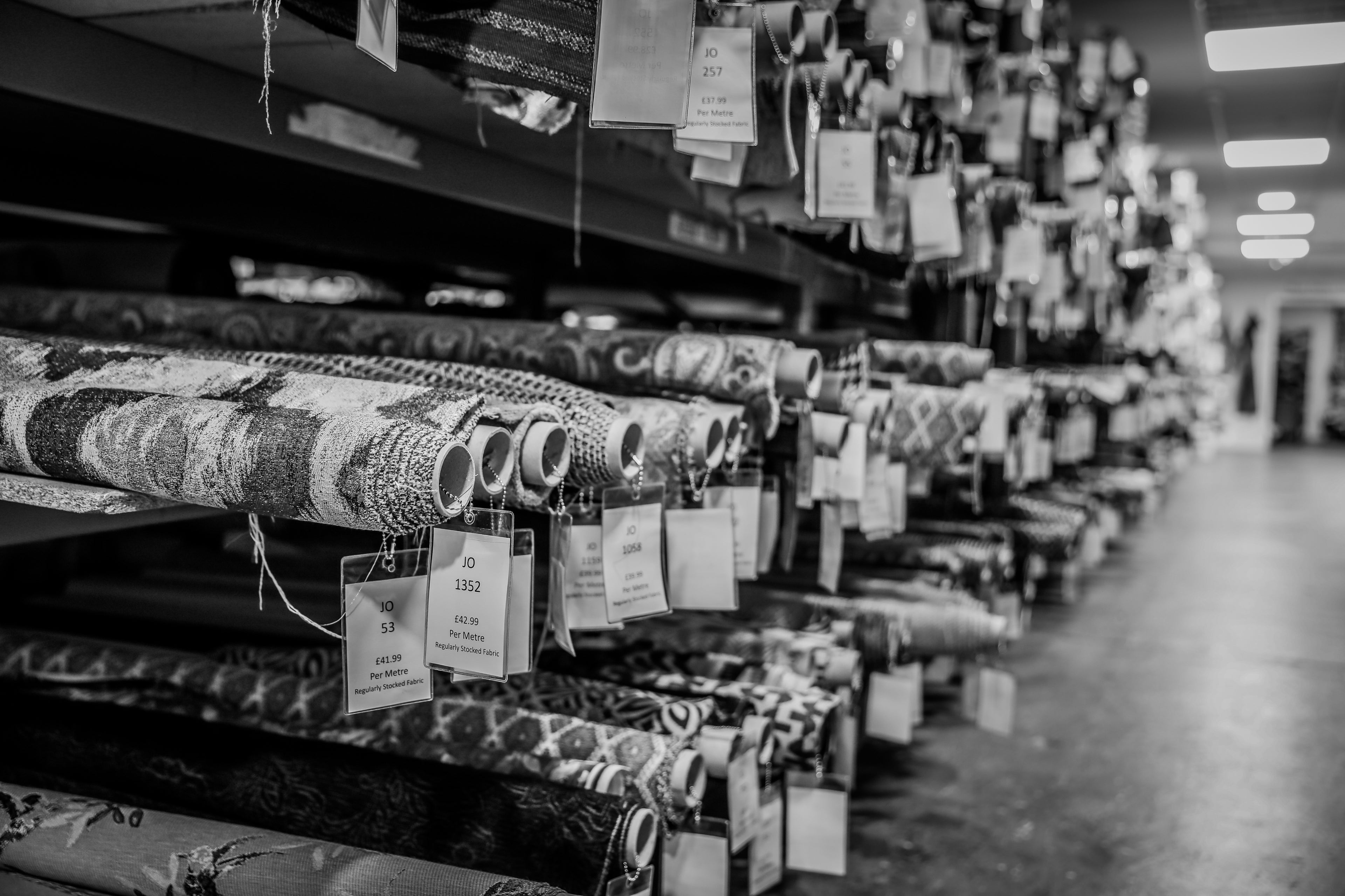
One Stop Shop? What Are The Qualities To Look For In A Fabric Retailer Both Upholstery And Curtain Projects
It is hard to resist the lure of a single shop that is able to fulfill your requirements for curtains and upholstery. The shop is a single source of efficiency, unified expertise, and cohesive sourcing. It is true that only a handful of shops are truly experts in both upholstery and curtain making. This is true for all retail outlets, ranging from Birmingham's warehouses through the Lichfield's boutiques, to Walsall's home-based outlets. Upholstery requires different expertise and specifications for fabrics, as well as project management abilities. Instead of seeking out an untrue supplier that can combine these two industries the smart buyer must identify a retailer with the right set of products and services, as well as an understanding. This guide will outline the 10 key indicators that will help you determine whether a fabric store can genuinely be your comprehensive partner in both projects, transforming a complex dual task into a simplified, efficient commission.
The Top 10 Things to Be Educated About
1. The Dual-Specification Stock: Beyond Aesthetics for Performance Grading.
A hybrid retailer will select stock according to its performance. It is possible to tell the difference between a staff member or retailer can tell the difference through labels and staff. For instance, "This heavy, cotton twill has a Martindale rub count of 90,000, making it ideal for the family sofa. Its density, opacity and weight makes it ideal for roman blinds. For full-length, interlined curtains I recommend this finer-weave, wool blend." They don't just show you gorgeous fabric; they filter it to ensure that it is suitable for final use. A Birmingham trade counter may accomplish this feat through sheer volume, whereas an Lichfield boutique achieves this through extremely selective, knowledgeable curation.
2. The "Workroom" Liaison Service Acting as a Conduit and Not Just an Buyer
The primary function of a one-stop retailer is serving as a knowledgeable intermediary between you and specialist makers. They should have built trusting relationships with multiple workrooms. Some may specialize in high-end upholstered furniture and another could focus on exquisitely tailored draperies. They are aware of the particular specifications each trade requires regarding fabric (seam allowance as well as pre-shrinking and grain direction) and can prepare your order accordingly. Their primary value lies in this logistical triangle, and goes beyond selling fabric on the basis of the millimetre.
3. The Sample Library contains both contract fabrics and decorative weaves.
Check out their sample system. In a shop that is designed to both, two parallel libraries are seamlessly integrated. One will contain the most durable upholstery fabrics for contract use (from brands like Momentum Linwood Kirkby or Kirkby), while the other will contain decorative drapery and curtain fabrics. The magic happens when they cross-reference, pulling a velvet from the upholstery section, and a matching drapery fabric from the section, with full knowledge of the way their weights and needs align. In Walsall this could be an essential, domestic-oriented collection. In Birmingham it could be an extensive archive of commercial-grade fabrics.
4. The Haberdashery as A Diagnostic Tool: Stocking Specific Trims For Both Trades
Check out their haberdashery. The wall should cover both disciplines. Not only should it include curtain tapes or threads, but also accessories for upholstery, such as zippers for upholstery in various lengths, high-strength cords, waddings of various densities, and piping cords. This indicates that the shop is able to support a customer through all stages of the build, and not only the first decision on aesthetics. A Lichfield shop might be specialized in more decorative trims, while Birmingham will be able to provide the basic industrial components.
5. The consultation begins with "Room Plan and Lifestyle."
The first thing they should ask you when you present a double project is not about the style but what the project will be employed for. For upholstery: "Is that for a formal TV room or family den? Do you have pets?" When choosing curtains, "What is the orientation of the window?" "Do you require light filtration or blackout?" They're diagnosing the functional needs prior to aesthetic needs. The approach that is holistic to questions reveals that they are concerned about the fabric, not only how it will be used within your house. The collaborative approach of a partner is evident in any showroom, whether it's in a bustling Birmingham showroom or in a chic Lichfield setting.
6. Transparency of "Made to Measure" as opposed to. "Off the Roll" Capabilities.
A hybrid retailer that is upfront about their abilities will be able to tell you what they are capable of doing on their own. They could offer fabrics by the yard for your upholstery DIY project, but outsource the making of curtains. In reverse. It is essential to have an knowledge of the boundaries and follow a easy process to outsource the work. Be wary of the shops that claim that they can "do everything" in a back room; quality upholstery and curtain making are separate crafts, each requiring dedicated equipment and expertise.
7. The Technical Data access the following data: Fire ratings, Rub count and Light speed.
Regulations for fire safety (UK Furnishing and Fire Safety Regulations) for upholstery are legally enforceable. For certain types of environments (rentals and commercial) they are equally crucial. A knowledgeable dealer can locate or provide the fabric's certificate of fire rating (e.g. BS5852 crib 5) instantly. Martindale rub numbers for upholstery as well as curtains with light fastness are also useful. Birmingham's shops catering to trade clients or Lichfield's top-quality suppliers will likely to have this level of technical expertise.
8. The "Project Buffer" Philosophy in advising and selling Safety Margin.
An important sign of expertise is their insistance on an "safety millimetre" or cuttings. They will recommend buying an extra half-metre for cushion covers in the future as well as repairs or piping. If you're designing custom curtains, they will recommend that you either save the scraps or buy another pattern repeat. It shows that the company is invested in long-term sustainability of the project. This approach to service transcends the traditional sales approach.
9. Regional Network Leverage - Filling in the Gaps.
Even the top hybrid store will not be able to stock all the items. It is a sign of their expertise when they can direct you to the appropriate regional shop for what's left. They might tell you, "We have the perfect upholstery fabric here however, for the intricate tassel fringe that you want on the curtains, I'd recommend this specific haberdasher located in Lichfield." The shop on a certain street in Walsall offers the finest blackout lining available at a low price. This frank signposting indicates that the store is part of a larger ecosystem, not just an isolated silo.
10. The "Whole Room" eye: an aesthetic that is coordinated across all disciplines.
The last thing to consider is do they have the ability to coordinate their different projects to create one space that is cohesive? The texture of a material such as boucle is comparable to the sheen on the sateen curtain. You can do this by proposing a welting cord in contrasting colors to the sofa, which will highlight another shade of the pattern of the curtain. This requires a designer's eye that can see beyond the particular bolt to the entire sensory experience. This blend of knowledge in the field, logistics networking, and artistic vision is what makes a rare, true "one-stop" shop regardless of the postal code in Birmingham or Lichfield.
